Transport in Humans
Matthew Williams
||6 min read|BloodCirculatory SystemCSEC BiologyImmunitySection BTransport
Why transport systems are needed, the double circulatory system, heart structure, blood vessels, blood components, and immunity and vaccination.
As organisms grow larger, diffusion alone cannot deliver substances fast enough — the distance from the surface to the innermost cells becomes too great. Multicellular organisms therefore develop specialised transport systems to move materials quickly over long distances.
Why Transport Systems Are Needed
A small organism has a high surface area to volume ratio, so diffusion supplies every cell adequately. In a large organism the ratio is much lower, and cells deep inside would starve of oxygen or accumulate waste. Transport systems solve this by:
- delivering oxygen, glucose, and hormones to every tissue
- removing carbon dioxide, urea, and other metabolic wastes
- distributing heat evenly around the body
The Human Circulatory System
Humans have a closed, double circulatory system:
- closed — blood stays within blood vessels at all times
- double — blood passes through the heart twice per complete circuit (once for the lungs, once for the body)
Pulmonary circulation: right ventricle → lungs → left atrium. Blood picks up oxygen and loses CO₂.
Systemic circulation: left ventricle → body → right atrium. Blood delivers oxygen and nutrients; returns with CO₂ and waste.
The Heart
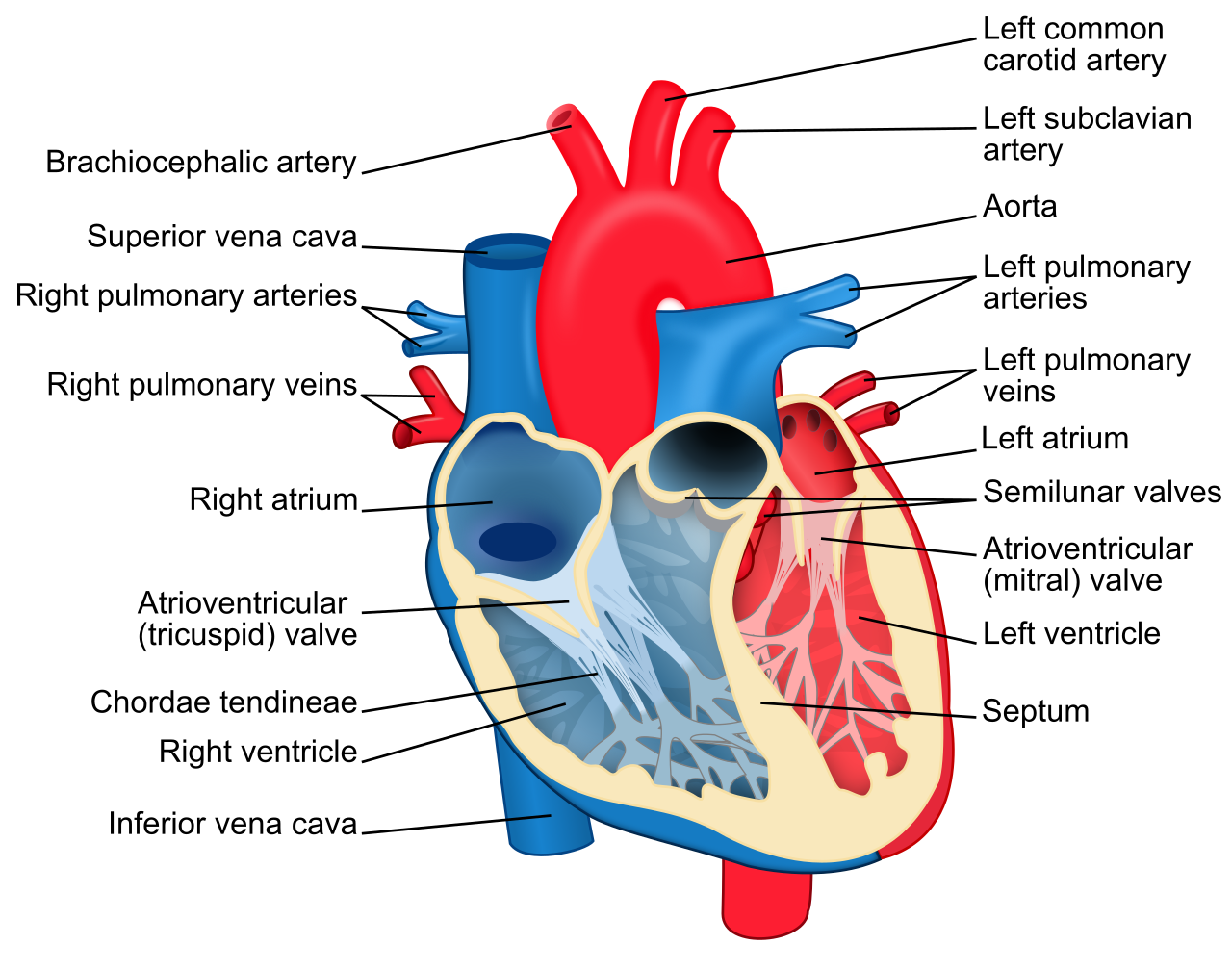
The heart is a muscular pump with four chambers: two atria (receive blood) and two ventricles (pump blood out). Valves prevent backflow.
- Right side receives deoxygenated blood from the body and pumps it to the lungs
- Left side receives oxygenated blood from the lungs and pumps it to the body
- The left ventricle has thicker walls than the right because it pumps blood the greater distance around the entire body
Blood Vessels
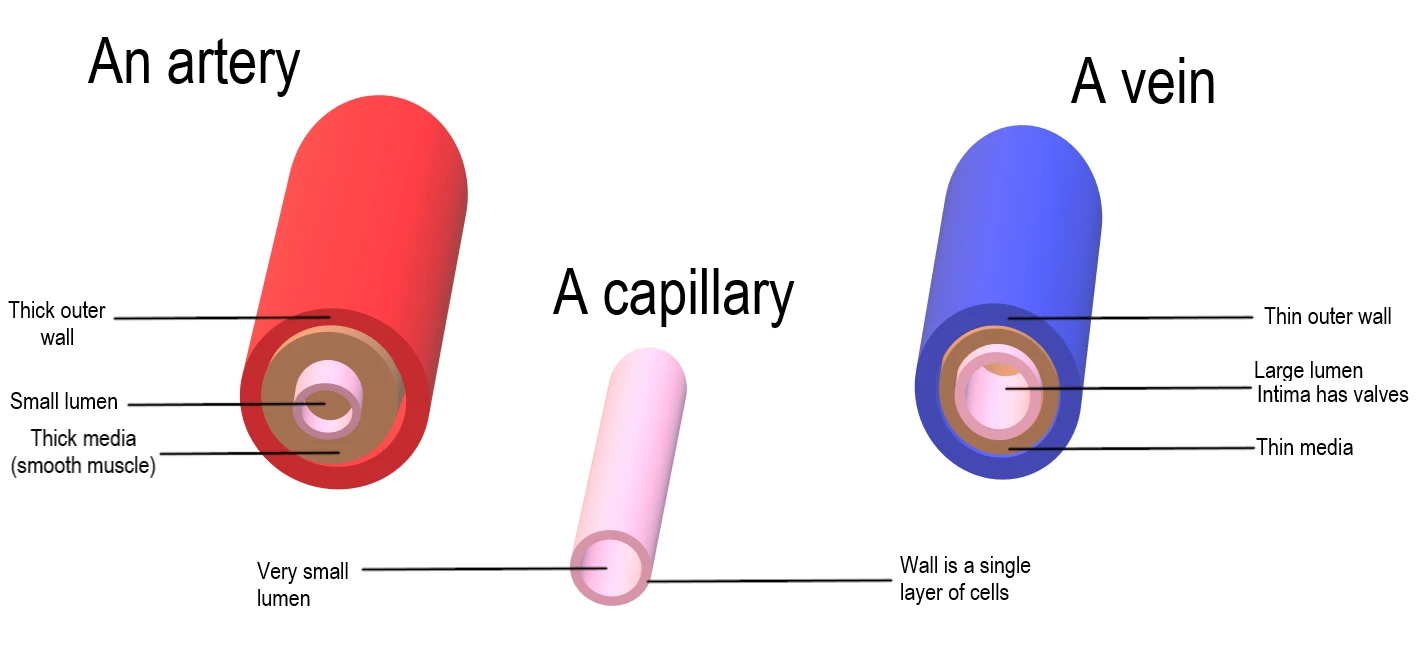
| Vessel | Wall structure | Lumen | Valves | Direction | Function |
|---|---|---|---|---|---|
| Artery | thick, muscular, elastic | narrow | no | away from heart | carries blood at high pressure |
| Vein | thin, less muscular | wide | yes | toward heart | returns blood at low pressure |
| Capillary | one cell thick | very narrow | no | connects arteries to veins | site of exchange between blood and tissues |
Capillaries are so thin that red blood cells must squeeze through in single file. Their walls allow plasma to leak out, forming tissue fluid that bathes cells.
Blood
Blood is a liquid connective tissue. It has four main components:
Plasma
Plasma is the pale yellow liquid portion of blood (about 55%). It transports:
- dissolved glucose, amino acids, fatty acids
- hormones
- CO₂ (partly as hydrogencarbonate ions)
- urea
- heat
Red Blood Cells (Erythrocytes)
Red blood cells carry oxygen using haemoglobin, an iron-containing protein that combines reversibly with oxygen:
haemoglobin + oxygen ⇌ oxyhaemoglobin
In the lungs (high O₂): oxyhaemoglobin forms. In the tissues (low O₂): oxygen is released.
Adaptations of red blood cells:
- biconcave disc shape — large surface area relative to volume; short diffusion distance to centre
- no nucleus — maximum space for haemoglobin
- flexible membrane — squeezes through narrow capillaries
- produced in vast numbers — high oxygen-carrying capacity
White Blood Cells (Leucocytes)
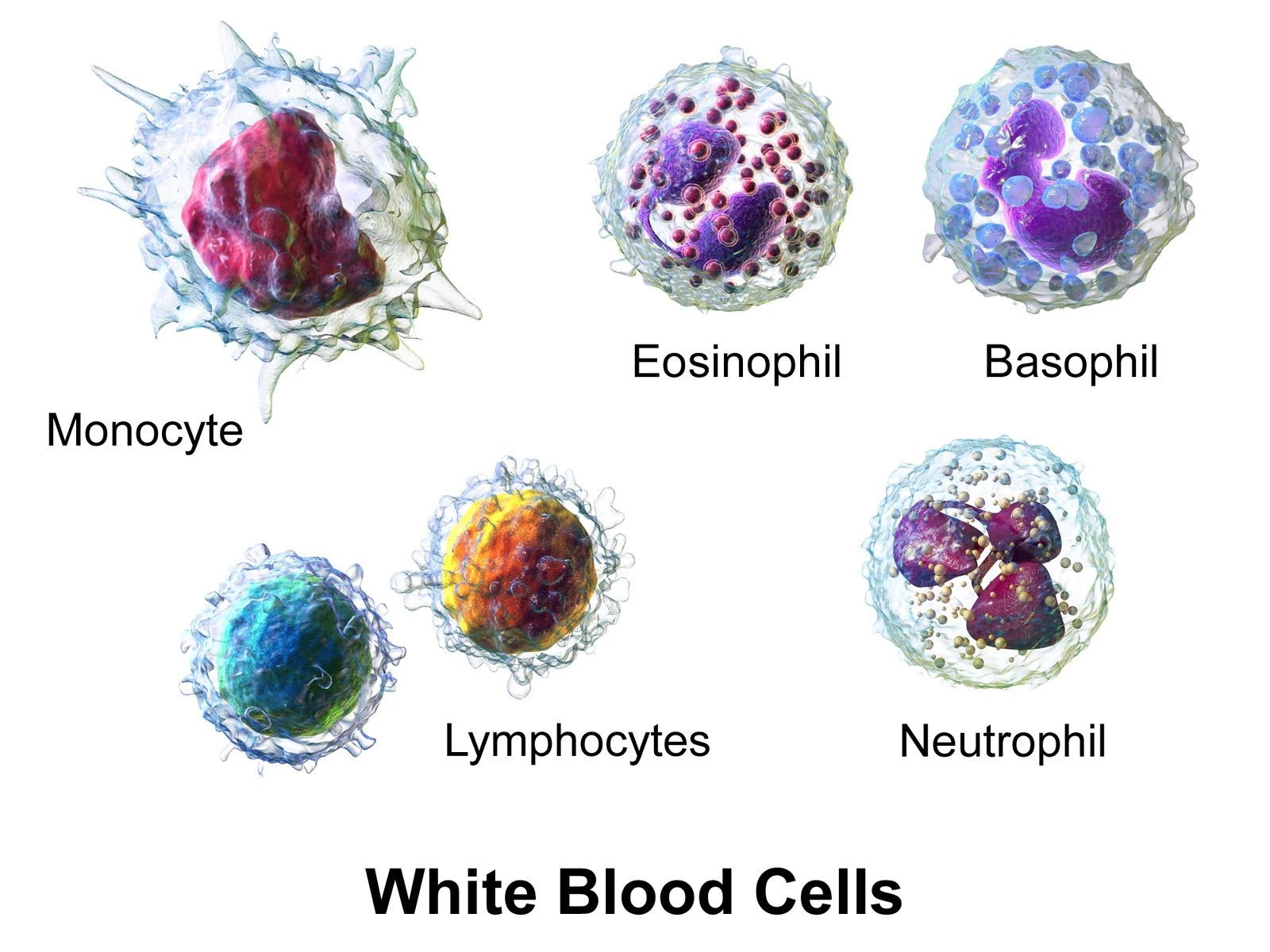
White blood cells defend the body. Two main types:
Phagocytes — engulf and destroy pathogens by phagocytosis (the phagocyte surrounds the pathogen, encloses it in a vacuole, and enzymes from lysosomes digest it).
Lymphocytes — produce antibodies. B-lymphocytes differentiate into:
- plasma cells — secrete antibodies specific to the antigen
- memory cells — remain in the blood long-term; allow a much faster response to the same pathogen on re-exposure
T-lymphocytes coordinate the immune response and attack infected or abnormal cells.
InfoHelpful but not required: other white blood cells
For CSEC, focus on neutrophils as the main phagocytes and lymphocytes as antibody-producing cells. Other white blood cells shown in the diagram, such as monocytes, eosinophils, and basophils, are helpful background but are not required in detail. In short: monocytes can develop into larger phagocytic cells, eosinophils are associated with parasites and allergic responses, and basophils release chemicals involved in inflammation.
Platelets
Platelets are cell fragments that trigger blood clotting when a vessel is damaged:
damaged tissue → platelets release thromboplastin → prothrombin → thrombin → fibrinogen → fibrin mesh → clot forms
Clotting prevents excessive blood loss and blocks entry of pathogens.
Immunity and Vaccination
Antigens are foreign molecules (usually on pathogen surfaces) that trigger an immune response.
Antibodies are proteins produced by B-lymphocytes that are specific to one antigen. They may neutralise toxins, cause pathogens to clump (agglutination), or mark them for destruction.
| Type of immunity | How acquired | Duration |
|---|---|---|
| Active natural | body produces own antibodies after infection | long-lasting |
| Active artificial | body produces own antibodies after vaccination | long-lasting |
| Passive natural | antibodies passed from mother to baby via placenta or breast milk | temporary |
| Passive artificial | ready-made antibodies injected | temporary |
Vaccination works by introducing weakened or dead pathogens, or their antigens, so the immune system produces antibodies and memory cells without the person suffering the disease. If the pathogen is later encountered, the memory cells allow a rapid secondary immune response.
Exam Tip
Active immunity lasts because memory cells are produced. Passive immunity is immediate but short-lived because no memory cells are made — the antibodies eventually break down.