Disease and Immunity
Matthew Williams
||8 min read|CSEC BiologyDiseaseImmunityMosquitoSection BVaccination
Types of disease, pathogen groups, mosquito-borne diseases including yellow fever, disease transmission, immunity, vaccination, antibiotic resistance, social and economic impacts, and managing hypertension and diabetes with diet and exercise.
Disease disrupts the normal functioning of the body. Understanding what causes disease, how it spreads, and how the body defends itself is central to public health — especially in the Caribbean, where tropical diseases such as malaria and dengue remain significant concerns.
Types of Disease
Not all diseases are caused by pathogens. The four main categories:
| Type | Cause | Examples |
|---|---|---|
| Pathogenic | microorganisms (pathogens) invade the body | malaria, tuberculosis, gonorrhoea, COVID-19 |
| Deficiency | lack of an essential nutrient | scurvy (vitamin C), rickets (vitamin D), anaemia (iron) |
| Hereditary | abnormal gene(s) inherited from parents | sickle cell anaemia, haemophilia, cystic fibrosis |
| Physiological | malfunction of body systems (not due to a pathogen or gene) | type 2 diabetes, hypertension, some cancers |
Exam Tip
Sickle cell anaemia is hereditary, not pathogenic — it is caused by an abnormal allele, not a microorganism. An exam question may try to confuse these categories.
Pathogen Groups
| Group | Characteristics | Examples | Diseases caused |
|---|---|---|---|
| Bacteria | prokaryotes; reproduce by binary fission; some produce toxins | Mycobacterium, Salmonella, Neisseria | tuberculosis, food poisoning, gonorrhoea |
| Viruses | non-cellular; require a host cell to replicate; very small | HIV, influenza virus, dengue virus | AIDS, influenza, dengue fever |
| Fungi | eukaryotes; reproduce by spores | Tinea, Candida | ringworm, athlete's foot, thrush |
| Protozoa | unicellular eukaryotes | Plasmodium, Giardia | malaria, giardiasis |
The Mosquito as a Disease Vector
A vector is an organism that transmits a pathogen from one host to another without being the primary host of the disease.
The Anopheles mosquito transmits malaria (caused by the protozoan Plasmodium). The Aedes mosquito transmits dengue, yellow fever, Zika, and chikungunya viruses.
Mosquito Life Cycle
The mosquito has a complete metamorphosis: egg → larva → pupa → adult.
Only female mosquitoes bite — they need blood proteins for egg development. Male mosquitoes feed only on plant nectar.
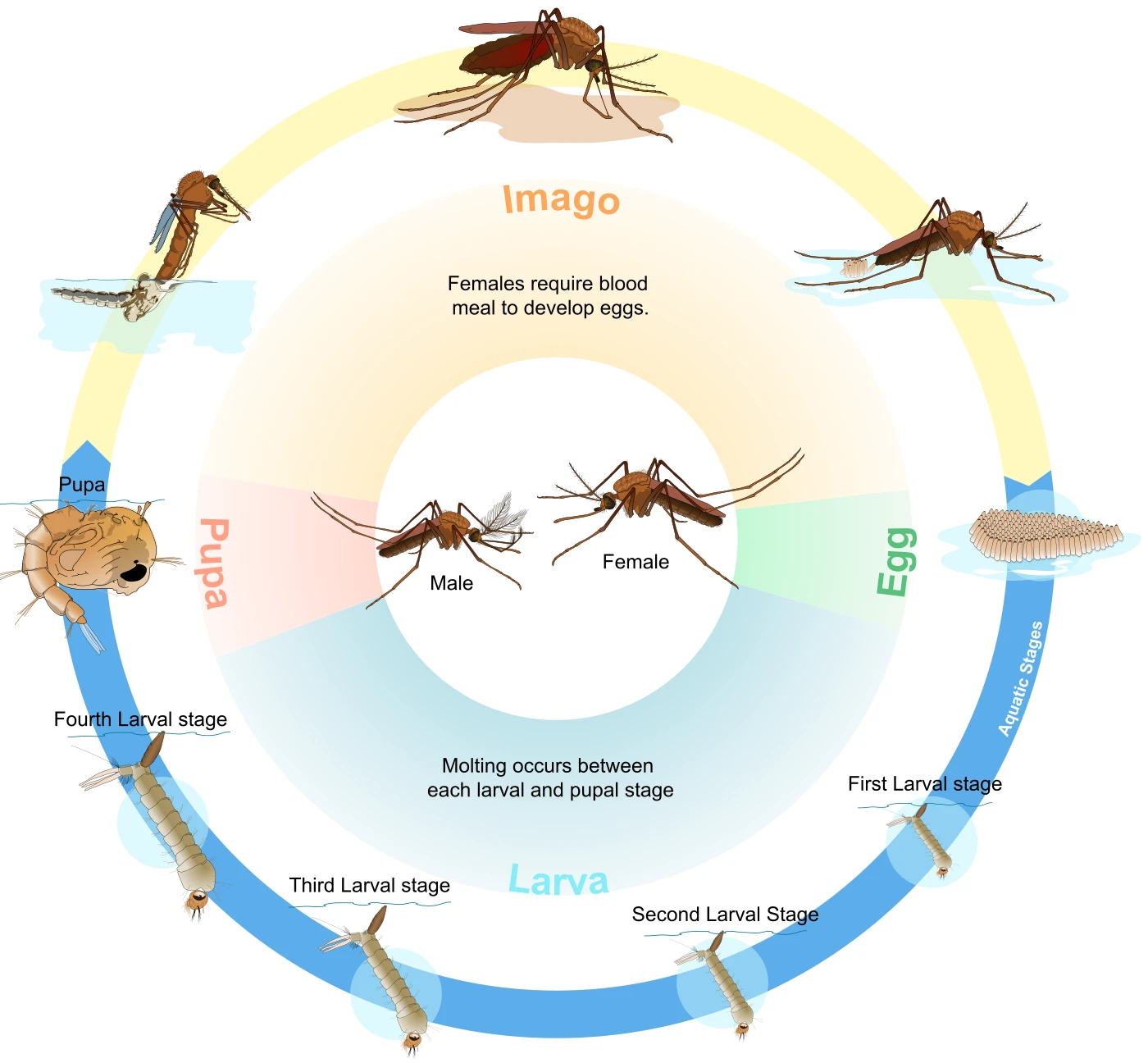
Note: the adult stage is sometimes labelled imago in biological diagrams — this is the scientific term for the fully developed adult insect.
Control at Each Stage
| Life stage | Control methods |
|---|---|
| Eggs and larvae | remove or drain standing water; cover water containers; apply oil or larvicide to water surfaces; introduce mosquito fish (biological control) |
| Pupae | same as larvae — drain or treat water |
| Adults | insecticide spraying (indoors and outdoors); mosquito nets (bed nets); repellents; wearing long clothing; screens on windows and doors |
Removing standing water is the most effective long-term strategy because it breaks the life cycle before mosquitoes become adults.
Transmission of Disease
Pathogens spread through several routes:
| Route | Mechanism | Examples |
|---|---|---|
| Airborne | droplets or dust inhaled | tuberculosis, influenza, COVID-19 |
| Waterborne | contaminated water ingested | cholera, typhoid |
| Foodborne | contaminated food consumed | salmonella, listeria |
| Direct contact | skin-to-skin or sexual contact | gonorrhoea, herpes, ringworm |
| Vectors | insects or animals carry pathogen to a new host | malaria (mosquito), dengue (mosquito) |
| Blood-borne | contaminated blood or needles | HIV, hepatitis B |
The Body's Defences
Non-specific Defences
The first line of defence does not target any particular pathogen:
- Skin — physical barrier; slightly acidic surface discourages growth
- Mucus — traps pathogens in airways
- Cilia — sweep mucus and pathogens away from lungs
- Stomach acid — kills most ingested pathogens
- Inflammation — increased blood flow brings white blood cells to an infected area
Phagocytosis
Phagocytes (a type of white blood cell) engulf and destroy pathogens:
- Phagocyte detects chemical signals from the pathogen
- It surrounds the pathogen with pseudopodia (extensions of cytoplasm)
- The pathogen is enclosed in a vacuole (phagosome)
- Lysosomes fuse with the vacuole and release digestive enzymes
- The pathogen is broken down
Antibodies and Lymphocytes
When a pathogen enters the body, its surface antigens are recognised as foreign. B-lymphocytes produce antibodies — proteins shaped to fit the antigen specifically:
- antibodies can neutralise toxins
- cause pathogens to clump (agglutination), making them easier to engulf
- mark pathogens for destruction by other white blood cells
B-lymphocytes also produce memory cells that persist long after the infection clears. On re-exposure to the same pathogen, memory cells respond rapidly — the secondary immune response — usually preventing illness.
Immunity
| Type | Description | Duration |
|---|---|---|
| Natural active | body makes antibodies after infection; memory cells formed | long-lasting |
| Artificial active | body makes antibodies after vaccination; memory cells formed | long-lasting |
| Natural passive | antibodies passed from mother to baby (placenta; breast milk) | temporary (weeks to months) |
| Artificial passive | ready-made antibodies injected (antiserum) | temporary |
Vaccination
A vaccine contains weakened or killed pathogens, inactivated toxins (toxoids), or pathogen proteins. The immune system responds as though facing real infection, producing antibodies and memory cells — without causing the disease.
If the vaccinated person later encounters the pathogen, the memory cells mount a rapid secondary response, clearing the pathogen before symptoms develop.
Herd immunity occurs when enough of a population is immune that a pathogen cannot spread efficiently, even protecting unvaccinated individuals.
Antibiotic Resistance
Antibiotics are medicines that kill bacteria or stop their growth. They do not work against viruses.
Antibiotic resistance develops through natural selection:
- Within a bacterial population, occasional mutations produce bacteria resistant to an antibiotic
- When the antibiotic is used, non-resistant bacteria die
- Resistant bacteria survive and reproduce
- Over time, the population becomes dominated by resistant strains
Overuse and misuse of antibiotics (not completing a course; using them for viral infections) accelerates resistance. Multi-drug-resistant bacteria ("superbugs") are a growing global health problem.
Social, Environmental, and Economic Impacts of Disease
| Area | Impact |
|---|---|
| Social | school absenteeism; family stress; disability; stigma (especially for HIV/AIDS); reduced quality of life |
| Environmental | mosquito control programs use pesticides that can harm non-target organisms; drainage of wetlands for mosquito control destroys habitats |
| Economic | healthcare costs; lost productivity from illness; burden on health systems; reduced tourism (disease outbreaks); cost of disease control programs |
Plant diseases also have economic impacts: fungal and bacterial diseases destroy crops, reduce yields, and threaten food security. Citrus canker, Panama disease (bananas), and coffee rust are regionally significant examples.
Managing Physiological Diseases: Hypertension and Diabetes
Physiological diseases are not caused by pathogens — they arise from malfunction of body systems. Diet and exercise play a central role in preventing and managing both hypertension and type 2 diabetes.
Hypertension (High Blood Pressure)
Hypertension puts strain on arteries and the heart, increasing the risk of stroke and heart attack.
Dietary management: reduce salt intake (lowers blood pressure); reduce saturated fat (lowers cholesterol and artery-narrowing); increase fruit, vegetables, and fibre.
Exercise: regular aerobic exercise strengthens the heart, lowers resting heart rate, and reduces arterial stiffness.
Type 2 Diabetes
In type 2 diabetes, cells become resistant to insulin, so blood glucose remains elevated after meals.
Dietary management: reduce simple sugars and refined carbohydrates (lowers glucose spikes); increase complex carbohydrates and fibre (slower glucose release); maintain a healthy body weight.
Exercise: increases muscle uptake of glucose (even without insulin); improves insulin sensitivity over time; helps control body weight.
Exam Tip
For both hypertension and diabetes, the exam expects you to name specific dietary changes (e.g. reduce salt, reduce sugar) and explain how they reduce the problem — not just say "eat healthy."